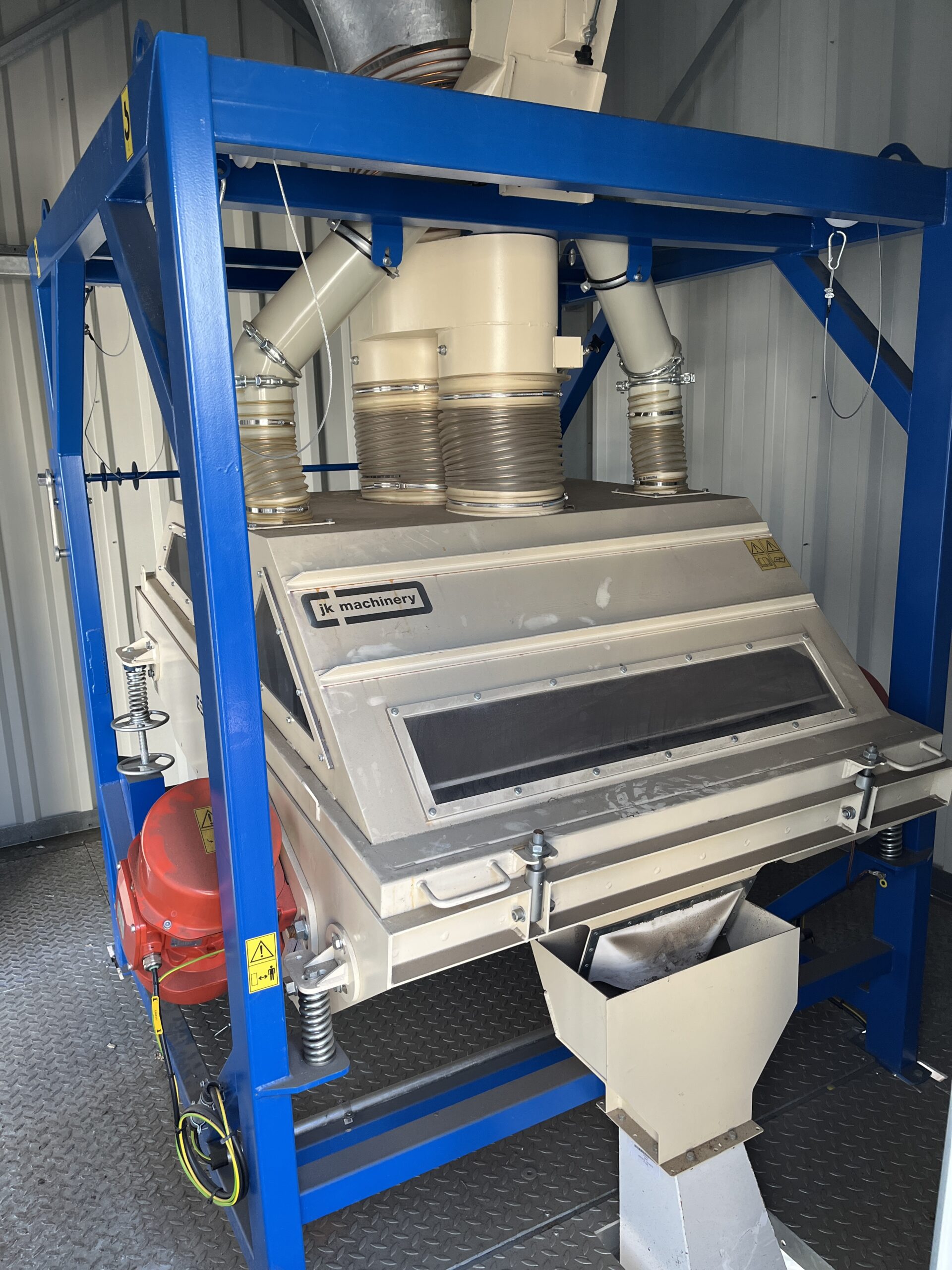
Description Destoner
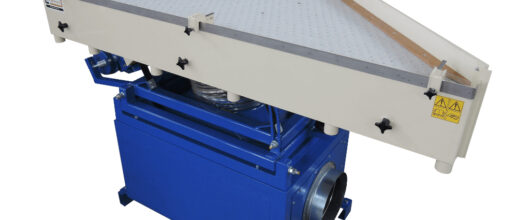
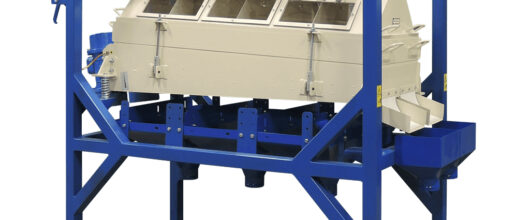
The destoner or stone separator is designed to remove heavy impurities (stones, sand) from kernels based on specific gravity. Pre-cleaned product is fed onto an inclined perforated deck. This deck is equipped with a vibration motor and conveys material in an upward direction. The heavy particles remain in contact with the deck while the light kernels float above it. As a result, the light particles slide downward and are separated from the heavy particles.
Applications of the Stone Separator
The destoner is widely used in the grain and seed industry, the food industry and in the processing of agricultural products.
Examples include:
- Stones, pebbles and gravel from grains, seeds or pulses
- Metal lumps, glass fragments or other heavy foreign matter
- Soil clods from harvested products such as potatoes or onions
- Heavy particles from coffee beans or rice
How the Stone Separator works
The product passes over a slightly inclined, vibrating perforated deck. The heavier material maintains contact with the perforated deck and, due to the vibrating motion, is conveyed towards the higher side of the machine. Lighter material rests on top of the layer, has no contact with the vibrating motion, and floats across the air deck towards the lower side. This operating principle is illustrated in the animation.
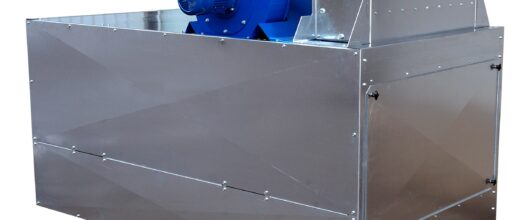
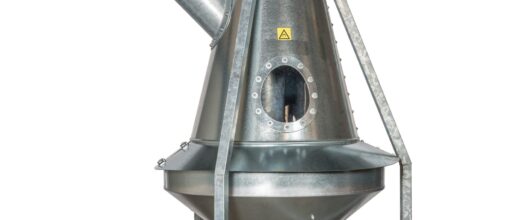
Cleaned material and stones each fall into a separate hopper. Depending on the type of product, the inclination angle of the deck, vibration speed, feed angle and air volume can be adjusted. The machine is supplied as standard with dust aspiration above the air table. The extracted air must be cleaned. Machines can be supplied with air recirculation to reuse up to 90% of the air, reducing the volume of exhaust air that needs to be cleaned in filters or cyclone separators.
In the animation, air is shown in blue, stones and sand in black, and light particles in yellow.
Technical Specifications
| Type of Machine | unit | o3 | o5 | o8 | 12 |
| Capacity | tons/hr | 1 – 2 | 2 – 6 | 6 – 12 | 8 – 16 |
| Dimensions (indication) | |||||
| Length | mm | 117 | 1.640 | 1.835 | 1.850 |
| Width | mm | 780 | 1.020 | 1.320 | 1.660 |
| Height | mm | 1.335 | 1.745 | 1.750 | 2.330 |
| top sieve area | m² | 0,21 | 0,5 | 1 | 1,5 |
| Air consumption | m³/h | 1.512 | 3.600 | 7.200 | 10.800 |
| Weight (indication) | kg | 205 | 380 | 450 | 640 |
Remark:
- Capacities apply to wheat
- Material processed by the destoner must first be cleaned using sieves and air
- The volume of aspirated air is greater for heavier materials and lower for lighter materials (e.g. sunflower seeds).
- Machine capacities are indicative and depend on the type, quality, moisture content and impurity level of the processed product
Advantages of the Destoner
-
- Improves the quality and safety of your end product
- Operates continuously, without interruptions to the process
- No chemicals or liquids required
- Easy to adjust to your product and situation
Contact
For more information or a customised offer, please contact Jansen&Heuning.
-
-
- Phone: +31(0)50 3126 448
- E-mail: sales@jh.nl
- Contact form: jh.nl/contact
-