Specifications
- Belt widths from 500 mm up to 1,800 mm
- Heavy duty industrial HD version or the lighter LD version
The quality of the rotating components is identical for both versions. - Strong frame made of folded profiles or hot rolled U profiles
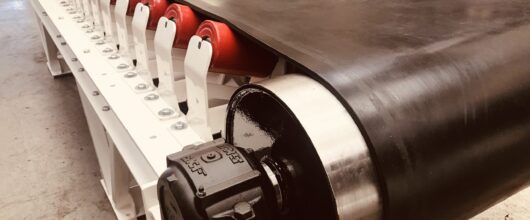
- Drive system with shaft mounted gearbox(es)
Advantages
- Low energy consumption
- Maintenance is easy to perform
- Long service life with the correct selection of materials and components
Execution options and accessories
- Suitable for indoor or outdoor installation
- Fixed or mobile
- Food-grade execution (EHEDG, EN-1935)
- Misalignment and overfill monitoring
- Pull cord switches over the full length
- Covers in various executions
- Fully spillage-free execution
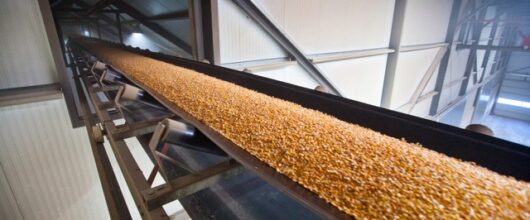
- Trough belt or flat belt
- Multiple loading points
- Flexible discharge through:
– A tripper car for variable discharge over the full length
– Combination of fixed conveyors and rail mounted travelling conveyors
– Cross bridge with a travelling conveyor featuring two rotation directions - All possible material types and coating
Required Power Belt Conveyor
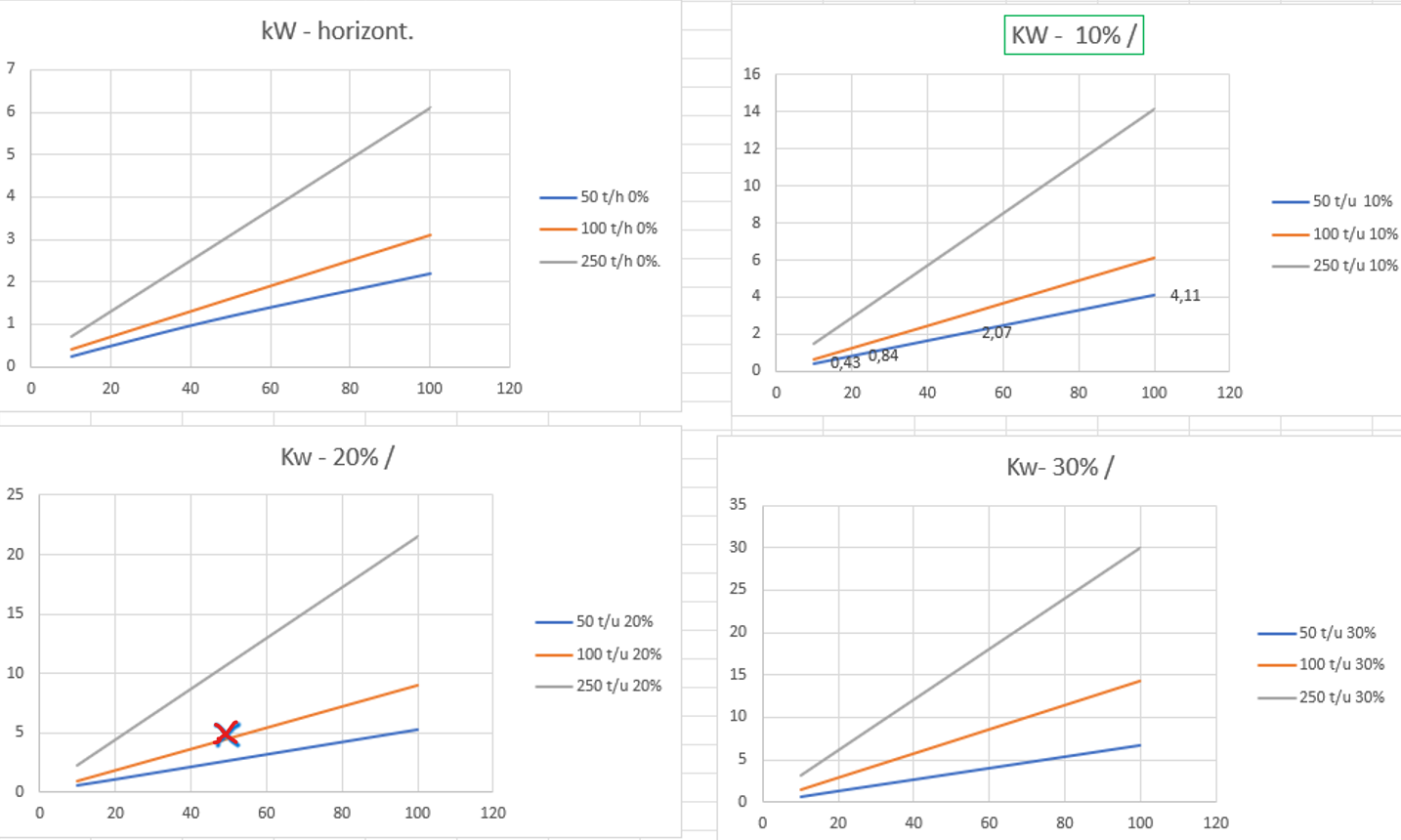
The required motor power for a belt conveyor depends primarily on the length, lifting height and capacity in tonnes per hour. Simple rules of thumb are too inaccurate. The best calculation is obtained with the Jansen&Heuning Calculation Program. To get you started quickly, the graphs below show the power required at various lengths, capacities and conveying angles.
As an example, a belt of 50 metres long, 20% incline (i.e. 10 m lifting height) and 100 tonnes/hour would require approximately 5 kW.